

Industry
The Case for Payments Intelligence in 2026
January 16, 2026
January 16, 2026

Grace Greenwood
Grace Greenwood
Grace Greenwood
How many blog posts and articles have you read recently that start with something along the lines of “Payment processing is complex…” or “Given the increasing complexity of the payments landscape…”? Not an insignificant number, we imagine.
It may seem trite, but ultimately, it’s true. Payment processing has always been a minefield of regulations, payment methods, card networks, currencies, primary players, third-party vendors, and more. Now that modern platforms make it easier than ever to grow (e.g. go global quickly, accept more currencies, blend one-time purchases with subscriptions, expand into new sales channel), that complexity compounds. As the market grows and your business scales to meet it, it’s easy to feel like you’re just along for the ride and doing your best to keep up.
Real quick, let’s review just some examples of payments industry changes over the last 18 months:
Visa rolled out their Commercial Enhance Data Program (CEDP), fundamentally changing how they treat enhanced transaction data and driving up interchange costs across the board.
Visa also introduced the Visa Account Monitoring Program (VAMP), redefining fraud risk to include all chargebacks plus early fraud warnings.
Buy Now, Pay Later went mainstream in many global markets, including the United States
AI agents started making purchases on behalf of consumers, creating entirely new transaction patterns that don't fit neatly into card type or payment method buckets.
Amid all this change, the ability to attract and retain customers, cut the cost of payment acceptance, and boost authorizations and conversion has never been more valuable. To get there, you need the right data visibility and insights across your entire payment’s stack. Unfortunately, your payment processor's dashboard is only showing you the same aggregate metrics it always has and not providing the insights you need. So what do you do?
The Gap Between Complexity and Visibility
Processor dashboards were never designed to handle this level of complexity. They show you base metrics like total transaction volume, approval rate, and basic declines to outline what happened—not why it's happening, how to respond appropriately, or if your strategic initiatives are even paying off. This is especially true if you're working with multiple PSPs, expanding internationally, or testing new payment methods. The complexity compounds and your blind spots multiply.
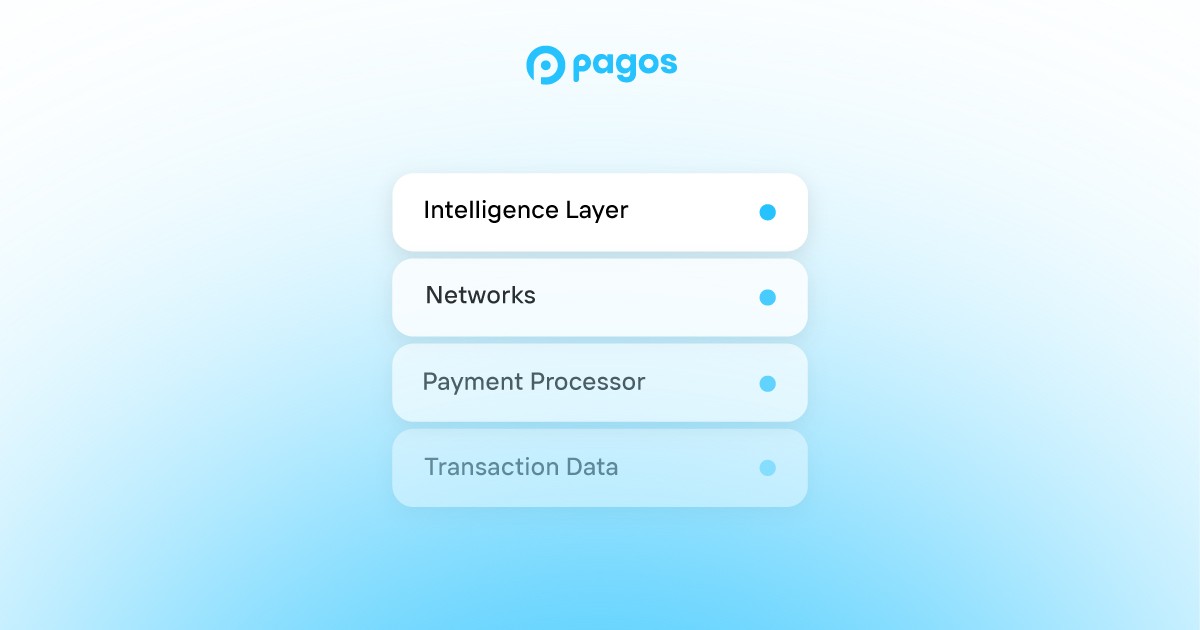
The Pagos team is full of seasoned payments veterans who all have said some version of the same thing: "I wish I'd had this my whole career." The intelligence layer Pagos provides is what’s been missing from payment management for years. We give you the ability to see across your entire payments stack, spot patterns, benchmark performance, and understand true cost drivers. With Pagos, you can visualize and report on the impact every major industry change has on your business. Not only can you then know exactly what actions to take in response, but you’ll become a payments hero at your organization.
Why This Matters NOW
Using payments intelligence to shape your strategic approach to industry changes is table stakes these days. Take VAMP as an example: if you're still only monitoring your fraud chargeback volume, you're likely underestimating your VAMP rate. Visa's formula not only includes non-fraud chargebacks and early fraud warnings, but the same chargeback can count against you twice if it results in both an early warning and a chargeback. These updates may have changed your risk profile overnight. Are you monitoring your VAMP rate in real time? Can your processor dashboard help you calculate or forecast it? Can you see what's driving risk across all your PSPs, sliced by card type or reason code?
Then there's agentic commerce. When AI agents start making purchases on behalf of the same customer using a variety of payment methods, how do you maintain a unified view? Payment Account References (PARs) help tie payment tokens back to the underlying card, but only if your system can access and use that data. How do you know when a transaction originates from legitimate consumer purchasing via an agent or someone using AI to initiate fraudulent transactions?
These challenges aren't hypothetical; they're happening now. Without the right intelligence tools, you're either reacting too slowly or not seeing the changes at all.
The Five Drivers of Payments Optimization
Here at Pagos, we like to talk about payments optimization across five key drivers: increase revenue, cut costs, fight fraud, get to know your customers, and A/B test solutions. As the payments industry grows and evolves, your strategic approach to each of these goals must as well. Here are some questions you may want to explore in each category at the start of 2026:
Increase Revenue
Which decline codes do you see the most of? Can you take action to reduce any of these declines?
How are issuers and PSPs changing the way they categorize declines over time? Are they even correct in what you see?
What payment methods, card brands, card types, or BINs see the most declines and errors?
Is your retry strategy increasing approvals enough to offset any incurred retry costs?
Do you receive automated alerts when approvals drop suddenly, so you can act quickly to save legitimate transactions?
Decrease Costs
How has CEDP impacted your interchange costs? How has VAMP increased your penalty fees?
What’s your effective rate by processor, card brand, and region? Can you identify where the majority of your cost spending goes?
Are evolving payment methods like debit rewards cards or BNPL impacting your total costs?
Could you route debit transactions through alternative networks to take advantage of cost savings?
Could you decrease costs by expanding your network tokenization strategy? How much could it save you?
Do you get real-time notifications when declines or chargebacks pile up so you can respond before costs spike?
Fight Fraud
Do you know your VAMP rate? Are you tracking all chargebacks (fraud and non-fraud) plus early fraud warnings?
What's driving your fraud risk across all your processors? Can you slice it by card type or chargeback reason?
As AI-powered bots create more bot-like transaction patterns, can you distinguish between legitimate agentic commerce and actual fraud?
Are you monitoring fraud trends in real-time, or only discovering issues when network penalties hit?
Are your fraud rules or third-party vendors blocking legitimate transactions?
Get to Know Your Customers
How do payment preferences vary across your customer segments and geographies?
Are customers embracing evolving payment methods like BNPL, and what is their impact on average order values?
Can you tie multiple tokens back to the same customer as mobile wallets and AI agents fragment your view?
A/B Test Solutions
When you make changes to routing logic or payment methods, can you measure the impact?
Is that spike in declines specific to your business, or is something systemic happening with issuers?
How do new payment methods or processors perform compared to your existing stack?
Payments Deserves a Seat at the Strategy Table
The payment landscape shifted dramatically in the last 18 months with the introduction of new network programs, new payment methods, and new cost structures. If your 2026 goals include growth, expansion, or better customer experiences, your payments strategy needs to keep pace.
Payments isn't a background operational task, and thinking of it as such is only holding you back. Your payments strategy is a strategic lever that drives revenue, controls costs, and shapes customer experience. Can you monitor yours clearly enough to pull it confidently?
How many blog posts and articles have you read recently that start with something along the lines of “Payment processing is complex…” or “Given the increasing complexity of the payments landscape…”? Not an insignificant number, we imagine.
It may seem trite, but ultimately, it’s true. Payment processing has always been a minefield of regulations, payment methods, card networks, currencies, primary players, third-party vendors, and more. Now that modern platforms make it easier than ever to grow (e.g. go global quickly, accept more currencies, blend one-time purchases with subscriptions, expand into new sales channel), that complexity compounds. As the market grows and your business scales to meet it, it’s easy to feel like you’re just along for the ride and doing your best to keep up.
Real quick, let’s review just some examples of payments industry changes over the last 18 months:
Visa rolled out their Commercial Enhance Data Program (CEDP), fundamentally changing how they treat enhanced transaction data and driving up interchange costs across the board.
Visa also introduced the Visa Account Monitoring Program (VAMP), redefining fraud risk to include all chargebacks plus early fraud warnings.
Buy Now, Pay Later went mainstream in many global markets, including the United States
AI agents started making purchases on behalf of consumers, creating entirely new transaction patterns that don't fit neatly into card type or payment method buckets.
Amid all this change, the ability to attract and retain customers, cut the cost of payment acceptance, and boost authorizations and conversion has never been more valuable. To get there, you need the right data visibility and insights across your entire payment’s stack. Unfortunately, your payment processor's dashboard is only showing you the same aggregate metrics it always has and not providing the insights you need. So what do you do?
The Gap Between Complexity and Visibility
Processor dashboards were never designed to handle this level of complexity. They show you base metrics like total transaction volume, approval rate, and basic declines to outline what happened—not why it's happening, how to respond appropriately, or if your strategic initiatives are even paying off. This is especially true if you're working with multiple PSPs, expanding internationally, or testing new payment methods. The complexity compounds and your blind spots multiply.
The Pagos team is full of seasoned payments veterans who all have said some version of the same thing: "I wish I'd had this my whole career." The intelligence layer Pagos provides is what’s been missing from payment management for years. We give you the ability to see across your entire payments stack, spot patterns, benchmark performance, and understand true cost drivers. With Pagos, you can visualize and report on the impact every major industry change has on your business. Not only can you then know exactly what actions to take in response, but you’ll become a payments hero at your organization.
Why This Matters NOW
Using payments intelligence to shape your strategic approach to industry changes is table stakes these days. Take VAMP as an example: if you're still only monitoring your fraud chargeback volume, you're likely underestimating your VAMP rate. Visa's formula not only includes non-fraud chargebacks and early fraud warnings, but the same chargeback can count against you twice if it results in both an early warning and a chargeback. These updates may have changed your risk profile overnight. Are you monitoring your VAMP rate in real time? Can your processor dashboard help you calculate or forecast it? Can you see what's driving risk across all your PSPs, sliced by card type or reason code?
Then there's agentic commerce. When AI agents start making purchases on behalf of the same customer using a variety of payment methods, how do you maintain a unified view? Payment Account References (PARs) help tie payment tokens back to the underlying card, but only if your system can access and use that data. How do you know when a transaction originates from legitimate consumer purchasing via an agent or someone using AI to initiate fraudulent transactions?
These challenges aren't hypothetical; they're happening now. Without the right intelligence tools, you're either reacting too slowly or not seeing the changes at all.
The Five Drivers of Payments Optimization
Here at Pagos, we like to talk about payments optimization across five key drivers: increase revenue, cut costs, fight fraud, get to know your customers, and A/B test solutions. As the payments industry grows and evolves, your strategic approach to each of these goals must as well. Here are some questions you may want to explore in each category at the start of 2026:
Increase Revenue
Which decline codes do you see the most of? Can you take action to reduce any of these declines?
How are issuers and PSPs changing the way they categorize declines over time? Are they even correct in what you see?
What payment methods, card brands, card types, or BINs see the most declines and errors?
Is your retry strategy increasing approvals enough to offset any incurred retry costs?
Do you receive automated alerts when approvals drop suddenly, so you can act quickly to save legitimate transactions?
Decrease Costs
How has CEDP impacted your interchange costs? How has VAMP increased your penalty fees?
What’s your effective rate by processor, card brand, and region? Can you identify where the majority of your cost spending goes?
Are evolving payment methods like debit rewards cards or BNPL impacting your total costs?
Could you route debit transactions through alternative networks to take advantage of cost savings?
Could you decrease costs by expanding your network tokenization strategy? How much could it save you?
Do you get real-time notifications when declines or chargebacks pile up so you can respond before costs spike?
Fight Fraud
Do you know your VAMP rate? Are you tracking all chargebacks (fraud and non-fraud) plus early fraud warnings?
What's driving your fraud risk across all your processors? Can you slice it by card type or chargeback reason?
As AI-powered bots create more bot-like transaction patterns, can you distinguish between legitimate agentic commerce and actual fraud?
Are you monitoring fraud trends in real-time, or only discovering issues when network penalties hit?
Are your fraud rules or third-party vendors blocking legitimate transactions?
Get to Know Your Customers
How do payment preferences vary across your customer segments and geographies?
Are customers embracing evolving payment methods like BNPL, and what is their impact on average order values?
Can you tie multiple tokens back to the same customer as mobile wallets and AI agents fragment your view?
A/B Test Solutions
When you make changes to routing logic or payment methods, can you measure the impact?
Is that spike in declines specific to your business, or is something systemic happening with issuers?
How do new payment methods or processors perform compared to your existing stack?
Payments Deserves a Seat at the Strategy Table
The payment landscape shifted dramatically in the last 18 months with the introduction of new network programs, new payment methods, and new cost structures. If your 2026 goals include growth, expansion, or better customer experiences, your payments strategy needs to keep pace.
Payments isn't a background operational task, and thinking of it as such is only holding you back. Your payments strategy is a strategic lever that drives revenue, controls costs, and shapes customer experience. Can you monitor yours clearly enough to pull it confidently?
How many blog posts and articles have you read recently that start with something along the lines of “Payment processing is complex…” or “Given the increasing complexity of the payments landscape…”? Not an insignificant number, we imagine.
It may seem trite, but ultimately, it’s true. Payment processing has always been a minefield of regulations, payment methods, card networks, currencies, primary players, third-party vendors, and more. Now that modern platforms make it easier than ever to grow (e.g. go global quickly, accept more currencies, blend one-time purchases with subscriptions, expand into new sales channel), that complexity compounds. As the market grows and your business scales to meet it, it’s easy to feel like you’re just along for the ride and doing your best to keep up.
Real quick, let’s review just some examples of payments industry changes over the last 18 months:
Visa rolled out their Commercial Enhance Data Program (CEDP), fundamentally changing how they treat enhanced transaction data and driving up interchange costs across the board.
Visa also introduced the Visa Account Monitoring Program (VAMP), redefining fraud risk to include all chargebacks plus early fraud warnings.
Buy Now, Pay Later went mainstream in many global markets, including the United States
AI agents started making purchases on behalf of consumers, creating entirely new transaction patterns that don't fit neatly into card type or payment method buckets.
Amid all this change, the ability to attract and retain customers, cut the cost of payment acceptance, and boost authorizations and conversion has never been more valuable. To get there, you need the right data visibility and insights across your entire payment’s stack. Unfortunately, your payment processor's dashboard is only showing you the same aggregate metrics it always has and not providing the insights you need. So what do you do?
The Gap Between Complexity and Visibility
Processor dashboards were never designed to handle this level of complexity. They show you base metrics like total transaction volume, approval rate, and basic declines to outline what happened—not why it's happening, how to respond appropriately, or if your strategic initiatives are even paying off. This is especially true if you're working with multiple PSPs, expanding internationally, or testing new payment methods. The complexity compounds and your blind spots multiply.
The Pagos team is full of seasoned payments veterans who all have said some version of the same thing: "I wish I'd had this my whole career." The intelligence layer Pagos provides is what’s been missing from payment management for years. We give you the ability to see across your entire payments stack, spot patterns, benchmark performance, and understand true cost drivers. With Pagos, you can visualize and report on the impact every major industry change has on your business. Not only can you then know exactly what actions to take in response, but you’ll become a payments hero at your organization.
Why This Matters NOW
Using payments intelligence to shape your strategic approach to industry changes is table stakes these days. Take VAMP as an example: if you're still only monitoring your fraud chargeback volume, you're likely underestimating your VAMP rate. Visa's formula not only includes non-fraud chargebacks and early fraud warnings, but the same chargeback can count against you twice if it results in both an early warning and a chargeback. These updates may have changed your risk profile overnight. Are you monitoring your VAMP rate in real time? Can your processor dashboard help you calculate or forecast it? Can you see what's driving risk across all your PSPs, sliced by card type or reason code?
Then there's agentic commerce. When AI agents start making purchases on behalf of the same customer using a variety of payment methods, how do you maintain a unified view? Payment Account References (PARs) help tie payment tokens back to the underlying card, but only if your system can access and use that data. How do you know when a transaction originates from legitimate consumer purchasing via an agent or someone using AI to initiate fraudulent transactions?
These challenges aren't hypothetical; they're happening now. Without the right intelligence tools, you're either reacting too slowly or not seeing the changes at all.
The Five Drivers of Payments Optimization
Here at Pagos, we like to talk about payments optimization across five key drivers: increase revenue, cut costs, fight fraud, get to know your customers, and A/B test solutions. As the payments industry grows and evolves, your strategic approach to each of these goals must as well. Here are some questions you may want to explore in each category at the start of 2026:
Increase Revenue
Which decline codes do you see the most of? Can you take action to reduce any of these declines?
How are issuers and PSPs changing the way they categorize declines over time? Are they even correct in what you see?
What payment methods, card brands, card types, or BINs see the most declines and errors?
Is your retry strategy increasing approvals enough to offset any incurred retry costs?
Do you receive automated alerts when approvals drop suddenly, so you can act quickly to save legitimate transactions?
Decrease Costs
How has CEDP impacted your interchange costs? How has VAMP increased your penalty fees?
What’s your effective rate by processor, card brand, and region? Can you identify where the majority of your cost spending goes?
Are evolving payment methods like debit rewards cards or BNPL impacting your total costs?
Could you route debit transactions through alternative networks to take advantage of cost savings?
Could you decrease costs by expanding your network tokenization strategy? How much could it save you?
Do you get real-time notifications when declines or chargebacks pile up so you can respond before costs spike?
Fight Fraud
Do you know your VAMP rate? Are you tracking all chargebacks (fraud and non-fraud) plus early fraud warnings?
What's driving your fraud risk across all your processors? Can you slice it by card type or chargeback reason?
As AI-powered bots create more bot-like transaction patterns, can you distinguish between legitimate agentic commerce and actual fraud?
Are you monitoring fraud trends in real-time, or only discovering issues when network penalties hit?
Are your fraud rules or third-party vendors blocking legitimate transactions?
Get to Know Your Customers
How do payment preferences vary across your customer segments and geographies?
Are customers embracing evolving payment methods like BNPL, and what is their impact on average order values?
Can you tie multiple tokens back to the same customer as mobile wallets and AI agents fragment your view?
A/B Test Solutions
When you make changes to routing logic or payment methods, can you measure the impact?
Is that spike in declines specific to your business, or is something systemic happening with issuers?
How do new payment methods or processors perform compared to your existing stack?
Payments Deserves a Seat at the Strategy Table
The payment landscape shifted dramatically in the last 18 months with the introduction of new network programs, new payment methods, and new cost structures. If your 2026 goals include growth, expansion, or better customer experiences, your payments strategy needs to keep pace.
Payments isn't a background operational task, and thinking of it as such is only holding you back. Your payments strategy is a strategic lever that drives revenue, controls costs, and shapes customer experience. Can you monitor yours clearly enough to pull it confidently?
Share this Blog Post
Share this Blog Post
Let's Chat on

Want to dig deeper into payments data, news, and insights? Have hot takes of your own?
We're talking all things payments on Reddit.
Latest Blog Posts
Subscribe to our Blog
Subscribe to
our Blog
Subscribe to our Blog
By submitting, you are providing your consent for future communication in accordance with the Pagos Privacy Policy.
Let's Chat on
Let's Chat on
Want to dig deeper into payments data, news, and insights? Have hot takes of your own?
We're talking all things payments on Reddit.